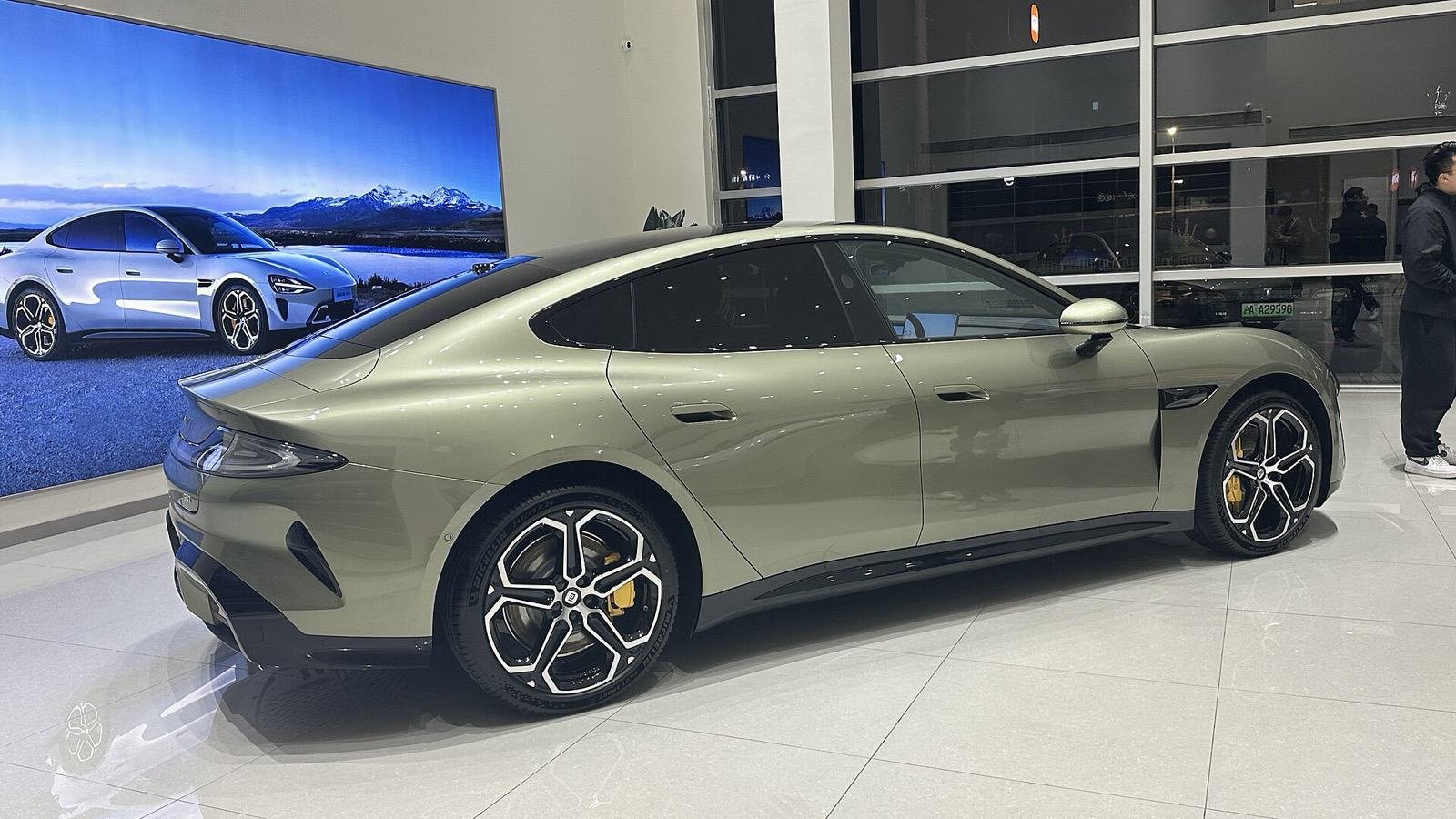
Xiaomi SU7 Ultra vs Rimac Nevera: 0-60
On paper, the Xiaomi SU7 Ultra should not exist in the same conversation as the Rimac Nevera. One is a Chinese tech-company sedan built in mass quantities for about $73,000. The other is a Croatian hypercar hand-assembled in a run of 150 units for roughly $2.4 million. And yet here we are: the SU7 Ultra claims 1.98 seconds to 60 mph, a figure within striking distance of the Nevera's independently GPS-verified 1.74 seconds, and in April 2025 it outpaced the Nevera's Nürburgring production-EV lap record by 0.341 seconds.
This breakdown covers what each car's numbers actually mean, where the data is independently verified and where it is manufacturer-claimed, and why the Xiaomi's 1.98-second figure is more nuanced than it looks.
The $73K vs $2.4M Matchup
In 2023, Rimac published a 1.74-second 0-60 time for the Nevera measured at ATP Germany by Dewesoft and Racelogic, two independent measurement systems used in professional motorsport. It set 23 performance records in a single day on non-prepped asphalt with road-legal Michelin Pilot Sport Cup 2R tires. The figure is about as well-documented as a production-car acceleration time can be.
In early 2025, Xiaomi launched the SU7 Ultra in China and published a 1.98-second 0-60 time. The figure was notable for an explicit statement that it was measured without a 1-foot rollout, a convention almost no other manufacturer discloses, which makes it unusual rather than definitive. No independent verification from a third-party organization exists as of June 2026.
The story is not "which car is faster." The Nevera (and especially the new Nevera R) holds that title with verified data. The story is what the SU7 Ultra represents at 3 percent of the price, and why the emerging gap in independent verification methodology matters to anyone who tests real cars with a GPS timer.
Xiaomi SU7 Ultra: What the Numbers Say
Xiaomi's flagship performance sedan uses a triple-motor layout, two rear motors (termed V8 units) and one front motor, producing a combined 1,548 PS, which translates to approximately 1,527 SAE horsepower. Torque is 1,770 Nm (1,305 lb-ft).
The official performance figures Xiaomi has published:
- 0-100 km/h: 1.98 seconds (manufacturer claim; stated without 1-foot rollout)
- Quarter mile: 9.23 seconds (manufacturer claim)
- Top speed: 350 km/h (217 mph)
- Weight: 2,360 kg (5,203 lb)
- Battery: 93.7 kWh net, 800V system
- CLTC range: 630 km, note that CLTC (China's test cycle) runs 20-30% optimistic versus EPA; real-world range is roughly 350 miles
- Price at launch (February 2025): RMB 529,900 (~$72,800 USD)
The car is sold exclusively in China. No US or European launch date has been announced as of June 2026. Xiaomi is preparing an updated variant with revised aerodynamics, but the SU7 Ultra's current production numbers reflect its performance sedan positioning.
The 1.98-Second Claim: A Methodological Note
Here is the detail that matters most to anyone who uses a GPS timer to measure their own car.
Almost every manufacturer-published 0-60 figure in automotive history uses a 1-foot rollout: the timer starts after the car has already moved one foot from the starting position. This convention comes from drag racing's NHRA timing protocols and shaves approximately 0.1 to 0.2 seconds from the number. Tesla's 1.99-second Model S Plaid figure uses rollout. Rimac's original 1.85-second Nevera figure used rollout. Virtually everyone does.
Xiaomi stated that the SU7 Ultra's 1.98 seconds was measured from a complete standstill with no rollout. If that disclosure is accurate and the methodology holds, it means the SU7 Ultra's number is measuring something closer to a true from-rest time, which would be roughly equivalent to a 1.88-1.95-second figure with standard rollout applied.
This would still make it slower than the Nevera's verified 1.74 seconds, but the gap between the numbers as published (1.98s vs 1.74s) partly reflects a methodology difference rather than purely a performance difference.
That said, the 1.98-second figure is a manufacturer claim with no independent certification. Drag race video results of the SU7 Ultra against a Ferrari SF90 XX produced approximately 9.3-second quarter-mile times, which is broadly consistent with the 1.98-second 0-60 claim being plausible. But "consistent with" is not the same as "verified."
Rimac Nevera: The Verified Benchmark
The Rimac Nevera's published performance story has two layers.
The original manufacturer spec at launch was 1.85 seconds to 60 mph. This used a standard 1-foot rollout and was the figure most publications cited through 2021-2022.
In April 2023 at ATP Papenburg in Germany, Rimac brought an unmodified customer-delivered Nevera to a controlled performance testing session. Using Dewesoft data logging and Racelogic VBOX GPS verification, the same systems used in professional motorsport, the car set 23 performance records in a single day. The key figures:
- 0-60 mph: 1.74 seconds (1-foot rollout, non-prepped asphalt, road-legal tires)
- Quarter mile: 8.25 seconds (same session)
For comparison, the earlier 8.582-second quarter-mile record from Famoso Raceway in California in 2021 was set on a VHT-prepped drag strip surface with more grip. The 2023 ATP result of 8.25 seconds on a normal road surface is actually quicker, a testament to the Nevera's ability to generate its own traction without depending on prepped pavement.
The Nevera's original 150-unit production run is sold out. The current model is the Nevera R: 2,107 horsepower, 1.66 seconds to 60 mph (Dewesoft-verified), and a 7.90-second quarter mile, 40 units at approximately $2.5 million each.
Nürburgring: Where They Already Raced the Clock
The head-to-head comparison has a result, at least on the Nürburgring Nordschleife.
In 2023, the Rimac Nevera set a production electric vehicle lap record of 7:05.298, driven by Martin Kodrík and verified by TÜV SÜD with full telemetry.
On April 1, 2025, Xiaomi sent the SU7 Ultra production car to the Nürburgring with driver Vincent Radermecker. The lap time: 7:04.957, officially verified by the Nürburgring, beating the Nevera's record by 0.341 seconds.
This is worth framing carefully. The SU7 Ultra set a production car EV record for the Nordschleife. A separate SU7 Ultra prototype (different homologation class) subsequently ran 6:22.091, but that figure is a prototype record, not directly comparable to the production car time.
The Nürburgring result gives the SU7 Ultra's performance claims more credibility than pure manufacturer-published figures would. You cannot fake a verified Nürburgring production car lap time.
As of this week (June 15, 2026), Xiaomi is reported to be preparing a refreshed SU7 Ultra with significantly revised aerodynamics including a larger rear wing, suggesting further Nürburgring attempts are being planned.
Head-to-Head Spec Table
| Spec | Xiaomi SU7 Ultra | Rimac Nevera (2023) | Rimac Nevera R |
|---|---|---|---|
| Power | 1,548 PS / ~1,527 SAE hp | 1,914 hp | 2,107 hp |
| Torque | 1,770 Nm (1,305 lb-ft) | 2,340 Nm (1,727 lb-ft) | UNVERIFIED |
| 0-60 mph | 1.98s* (mfr claim, no rollout) | 1.74s† (Dewesoft+Racelogic, 1-ft rollout) | 1.66s† (Dewesoft-verified) |
| Quarter mile | 9.23s (mfr) / ~9.3s (drag video) | 8.25s (ATP 2023, non-prepped) | 7.90s (verified) |
| Top speed | 350 km/h (217 mph, mfr) | 412 km/h (258 mph, Racelogic-verified)†† | UNVERIFIED |
| Weight | 2,360 kg (5,203 lb) | 2,300 kg (5,071 lb) | UNVERIFIED |
| Battery | 93.7 kWh net, 800V | 106.8 kWh net | UNVERIFIED |
| Range | ~350 mi est. (630 km CLTC) | ~305 mi (490 km WLTP) | UNVERIFIED |
| Nürburgring | 7:04.957‡ (prod. car, April 2025) | 7:05.298‡ (prod. EV, 2023) | N/A |
| Price | ~$72,800 USD (China only) | ~$2.4M (150 units, sold out) | ~$2.5M (40 units) |
\*Xiaomi states measured without 1-foot rollout, not comparable to industry-standard rollout figures without applying a conversion (~0.1-0.2s addition for rollout-equivalent). No third-party verification exists. †Achieved at ATP Papenburg, Germany, April 2023. Non-prepped asphalt. Road-legal Michelin Pilot Sport Cup 2R tires. Independently verified by Dewesoft and Racelogic. ††The 258 mph / 412 km/h top speed was verified at Papenburg 2023. Customer-delivered Neveras are electronically limited to 352 km/h (219 mph) unless unlocked for private track days. ‡Both Nürburgring times are officially verified production car EV records (Nürburgring GmbH and TÜV SÜD respectively). Not directly comparable to prototype-class laps.
Who Can Actually Buy One?
Xiaomi SU7 Ultra: Available in China only. Launch price RMB 529,900 (~$72,800 USD). No US or European launch announced. Sales peaked at 3,101 units in March 2025 and fell to 64 units in April 2026, suggesting the pending refresh is weighing on demand. China-market purchase only.
Rimac Nevera: The original 150-unit run is sold out globally. The Nevera R (40 units, ~$2.5M) is the current available model, though it too may be fully subscribed. For most readers, both of these cars exist entirely in the realm of "cars you experience via video and leaderboard data."
The practical delta: the SU7 Ultra costs about 3 percent of a Nevera R. In China, you could buy one without being a billionaire. Nobody in the US market can currently buy either.
What This Means for Real-World Testing
Both cars illustrate the gap that FastTrack is built to close: manufacturer figures, independent test results, and what a GPS timer actually records are three different things, and understanding which is which is the whole game.
The Nevera's 1.74 seconds is unusually trustworthy because it was measured on non-prepped asphalt with road-legal tires, verified by two independent systems. That kind of documentation is rare. Most manufacturer figures, including all the 0-60 numbers on new model launch press sheets, use 1-foot rollout, prepped surfaces, and optimal conditions that a buyer will never replicate.
When you time your car with a GPS timer, you are measuring from a true standstill, on whatever tires and road surface you have, at real ambient conditions. The result is accurate, but it is measuring something legitimately different from most published specs. Our guide on how GPS 0-60 timing works covers why the methodology gap exists and what your number actually means relative to the sticker spec.
For the fastest EV 0-60 times ranked context: the Nevera R's verified 1.66 seconds leads all production cars as of June 2026. The SU7 Ultra's 1.98-second claim, if accurate on a rollout-equivalent basis (~1.88-1.95s adjusted), would place it between the Aspark Owl and the Lucid Air Sapphire on the EV leaderboard. See the fastest production cars of 2026 for the full cross-category picture.
FAQ
Is the Xiaomi SU7 Ultra's 1.98s 0-60 independently verified?
No. The 1.98-second figure is Xiaomi's official manufacturer claim. Xiaomi states it was measured without a 1-foot rollout, an unusual disclosure. No third-party organization has published an independently verified 0-60 time for the SU7 Ultra. The Nürburgring production car record (7:04.957, officially verified by the Nürburgring GmbH on April 1, 2025) provides independent confirmation that the SU7 Ultra is a genuinely fast car, but it does not directly validate the 0-60 number.
Is the Rimac Nevera's 1.74s 0-60 more credible than the SU7 Ultra's 1.98s?
Yes, significantly more credible. The Nevera's 1.74 seconds was verified at ATP Papenburg in April 2023 by two independent measurement systems (Dewesoft and Racelogic) on non-prepped asphalt with road-legal tires, under controlled conditions that were fully documented. The SU7 Ultra's figure is a manufacturer-published number with no third-party certification.
Did the Xiaomi SU7 Ultra beat the Rimac Nevera at the Nürburgring?
Yes, in the production EV category. The SU7 Ultra production car lapped in 7:04.957 (April 1, 2025, officially verified by the Nürburgring), beating the Rimac Nevera's former record of 7:05.298 (set 2023, TÜV SÜD verified) by 0.341 seconds. Note: a separate SU7 Ultra prototype ran 6:22.091 in a different homologation class, that figure is not comparable to the production car record.
Can I buy a Xiaomi SU7 Ultra in the US?
No. As of June 2026, the SU7 Ultra is available in China only at approximately RMB 529,900 (~$72,800 USD). Xiaomi has announced European expansion plans for 2027 for the standard SU7, not the Ultra. No US launch has been announced.
What is the Rimac Nevera R and how does it compare?
The Nevera R is the current Rimac model: 2,107 horsepower, 1.66 seconds to 60 mph (Dewesoft-verified), and a 7.90-second quarter mile. Approximately 40 units were produced at around $2.5 million each. The Nevera R holds the independently verified production car records for both 0-60 mph and quarter-mile ET as of June 2026. It is faster than both the original Nevera and the SU7 Ultra by verified margins.
How does GPS testing relate to these numbers?
A GPS timer like FastTrack measures from a true standstill, no 1-foot rollout, no prepped surface, real-world conditions. The Rimac Nevera's 1.74-second figure, unusually, was also measured on non-prepped asphalt, which puts it closer to a "GPS from rest" time than most manufacturer figures. The SU7 Ultra's 1.98-second number, if Xiaomi's no-rollout claim is accurate, is also measuring from rest. Both would still be slower on a GPS timer under normal street conditions due to temperature, battery state, and tire preparation differences, but the gap between published spec and GPS reality is smaller for these two cars than for most vehicles.