Updated August 2026
Fastest EVs 0-60 (2026), Ranked
Electric vehicles hold every meaningful 0-60 record. Maximum torque arrives the instant you press the pedal, there are no gears to shift through, and independent motors at each axle put the power down cleanly. The result is a class of cars, from multi-million-dollar hypercars to sub-$60,000 sedans, that accelerate harder than almost anything with a combustion engine.
This hub ranks the fastest 2026 EVs by 0-60 time, spanning the full range from hypercars to attainable performance models, with horsepower, price, and drivetrain for context. For the value-focused cut, see our companion list of affordable fast EVs under ~$65K, same honesty, narrower budget.
How to read these numbers
Every 0-60 time is the manufacturer's claim unless it is marked (tested), meaning a third party independently measured it. Times for record cars like the Rimac Nevera R include a 1-foot rollout, the standard US drag-racing convention, so a true standstill run on public pavement will read a touch slower. Prices are approximate US figures as of August 2026, and quarter-mile times appear where a claimed or tested number exists. This ranking covers vehicles sold or confirmed for the US market.
The fastest EVs of 2026 by 0-60
Open data: download the full EV 0-60 table as CSV, free to reuse with credit to FastTrack.
| EV | 0-60 mph | ¼-mile | Horsepower | Price (approx.) | Drivetrain |
|---|---|---|---|---|---|
| Rimac Nevera R | 1.66s (tested) | 7.9s | 2,107 hp | ~$2,400,000 | EV, AWD |
| Aspark Owl | 1.72s (tested) | , | 1,953 hp | ~$3,200,000 | EV, AWD |
| Pininfarina Battista | 1.79s (tested) | , | 1,877 hp | ~$2,200,000 | EV, AWD |
| Lucid Air Sapphire | 1.89s (tested) | , | 1,234 hp | ~$249,900 | EV, AWD |
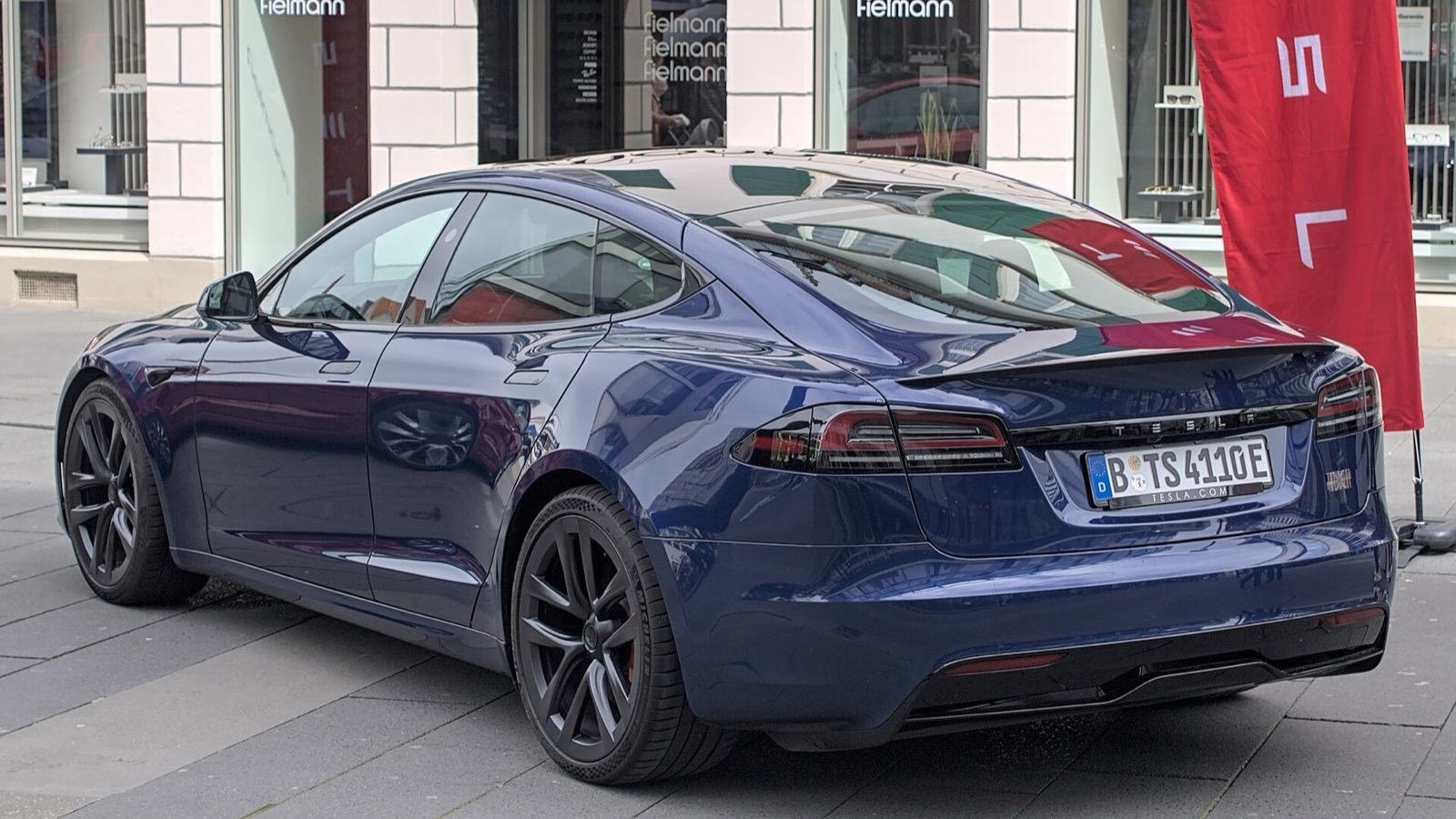
| Tesla Model S Plaid | 1.99s | 9.2s | 1,020 hp | ~$96,630 | EV, AWD |
| Porsche Taycan Turbo GT (Weissach) | 2.1s (tested) | 9.5s | 1,092 hp | ~$230,000 | EV, AWD |
| Tesla Model X Plaid | 2.5s | 9.9s | 1,020 hp | ~$101,630 | EV, AWD |
| Maserati GranTurismo Folgore | 2.6s | , | 751 hp | ~$200,000 | EV, AWD |
| Porsche Macan Turbo Electric | 2.9s | , | 630 hp | ~$105,300 | EV, AWD |
| Tesla Model 3 Performance | 2.9s | , | 510 hp | ~$56,620 | EV, AWD |
| GMC Hummer EV | 3.0s | , | 1,000 hp | ~$100,000 | EV, AWD |
| Kia EV6 GT | 3.2s (tested) | , | 641 hp | ~$63,800 | EV, AWD |
| Hyundai Ioniq 5 N | 3.25s | , | 641 hp | ~$68,000 | EV, AWD |
| Tesla Model Y Performance | 3.3s | , | 460 hp | ~$59,130 | EV, AWD |
| Lucid Gravity Grand Touring | 3.4s | , | 828 hp | ~$95,000 | EV, AWD |
| Chevrolet Blazer EV SS | 3.4s | , | 615 hp | ~$61,000 | EV, AWD |
| Ford Mustang Mach-E GT | 3.5s | , | 480 hp | ~$54,000 | EV, AWD |
| BMW i4 M60 | 3.7s | , | 601 hp | ~$70,000 | EV, AWD |
*Price note: the Kia EV6 GT figure is the 2025 MSRP, the 641-hp 2026 GT isn't priced yet (Kia has announced only the GT-Line, from $48,700 RWD / $53,000 AWD). Don't confuse the GT with the GT-Line.*
Curious how these stack up on power density? Run any EV's horsepower and weight through the power-to-weight ratio calculator to see why a two-ton electric sedan can chase a hypercar to 60.
The two tiers of fast EVs
The hypercar tier is where physics gets absurd. The Rimac Nevera R, a 40-unit, 2,107-horsepower evolution of the Nevera, set the production-car 0-60 record at an independently tested 1.66 seconds. The Aspark Owl and Pininfarina Battista (which shares Rimac's powertrain) sit just behind. These are seven-figure machines, and their headline times include a 1-foot rollout.
The attainable tier is the more useful story. The Lucid Air Sapphire, at a tested 1.89 seconds, is effectively a four-door with hypercar acceleration. The Tesla Model S Plaid claims 1.99 seconds. And once you drop under $70,000, the Tesla Model 3 Performance (2.9s), Kia EV6 GT (a tested 3.2s), and Hyundai Ioniq 5 N (3.25s) deliver acceleration that would have embarrassed a supercar a decade ago, for the price of a loaded mainstream sedan.
Why EVs dominate 0-60 times
Instant torque. A combustion engine builds torque as revs climb; an electric motor makes peak torque from zero rpm. The hardest part of the launch, the first fraction of a second, is exactly where the EV is strongest.
No gear-shift losses. A geared automatic gives up 0.2 to 0.5 seconds per shift to torque interruption. Most performance EVs are single-speed, so power delivery is continuous from a standstill to well past 60 mph.
Traction from clever hardware. Dual- and quad-motor EVs meter torque to each axle independently, adjusting for slip faster than any human or mechanical differential can. With the battery mounted low in the floor, weight distribution and grip both improve, turning mass into a launch advantage instead of a liability.
The one honest caveat is repeatability. After several back-to-back hard launches, an EV can hit battery thermal or state-of-charge limits and trim power, while a well-cooled combustion car holds output. For a single measured run, though, the EV almost always wins.
What changes your real 0-60
Manufacturer numbers assume a full charge, a warm battery, prepped pavement, ideal weather, and frequently a 1-foot rollout. Your result depends on your state of charge, tire temperature, the surface, and your launch. A Model S Plaid that claims 1.99 seconds at 100% charge will read slower at half charge or on a cold morning. That gap, spec sheet versus reality, is the reason to measure your own car rather than trust the brochure. For a deeper look at the rollout convention, see our Rimac Nevera R breakdown.
Measure your own EV
FastTrack times your EV's 0-60 with your iPhone's GPS and accelerometer, no extra hardware, and stores every run so you can watch how charge level, temperature, and tire choice move the number. Test at a full charge, then compare against half charge; test on stock tires, then on stickier rubber.
Then compare against the field: post your run to the FastTrack leaderboards and see how your car ranks against other owners of the same model. For the budget-focused version of this list, head to affordable fast EVs of 2026.
FAQ
What is the fastest EV 0-60 time in 2026?
The Rimac Nevera R holds the production-car record at an independently tested 1.66 seconds (with a 1-foot rollout), aided by 2,107 horsepower. The Aspark Owl (1.72s tested) and Pininfarina Battista (1.79s tested) follow. All three are seven-figure hypercars; the quickest attainable EV here is the tested-1.89-second Lucid Air Sapphire.
Why is my EV slower than the manufacturer's 0-60 claim?
Claims assume a full charge, a warm battery, ideal weather, prepped pavement, and often a 1-foot rollout that shaves a tenth or more. Real runs happen at whatever charge and temperature you have, on public roads, with everyday tires. Expect to trail the spec sheet, which is exactly why measuring your own car with GPS gives you the number that actually applies to you.
What's the fastest affordable EV?
Among vehicles near or under $65,000, the Tesla Model 3 Performance (a claimed 2.9 seconds) is the quickest here, with the independently tested Kia EV6 GT (3.2s) close behind. For the full value-focused ranking, see our affordable fast EVs of 2026 list.
Does battery charge level change my 0-60 time?
Yes, noticeably. Peak power falls as the pack depletes, so a car that runs its best number at 100% charge will be slower at 50% and slower still near empty. Cold batteries add resistance and cut power too. For a fair comparison over time, test at a similar state of charge and temperature and log the conditions, FastTrack keeps that history for you.
How do I measure my EV's real 0-60 time?
Use a GPS timing app like FastTrack on a safe, legal, flat stretch of road: start from a full charge, let launch control manage the traction pulse if your car has it, and let the app auto-start when it detects acceleration. Run several passes and average them, and note the conditions so future runs are comparable.