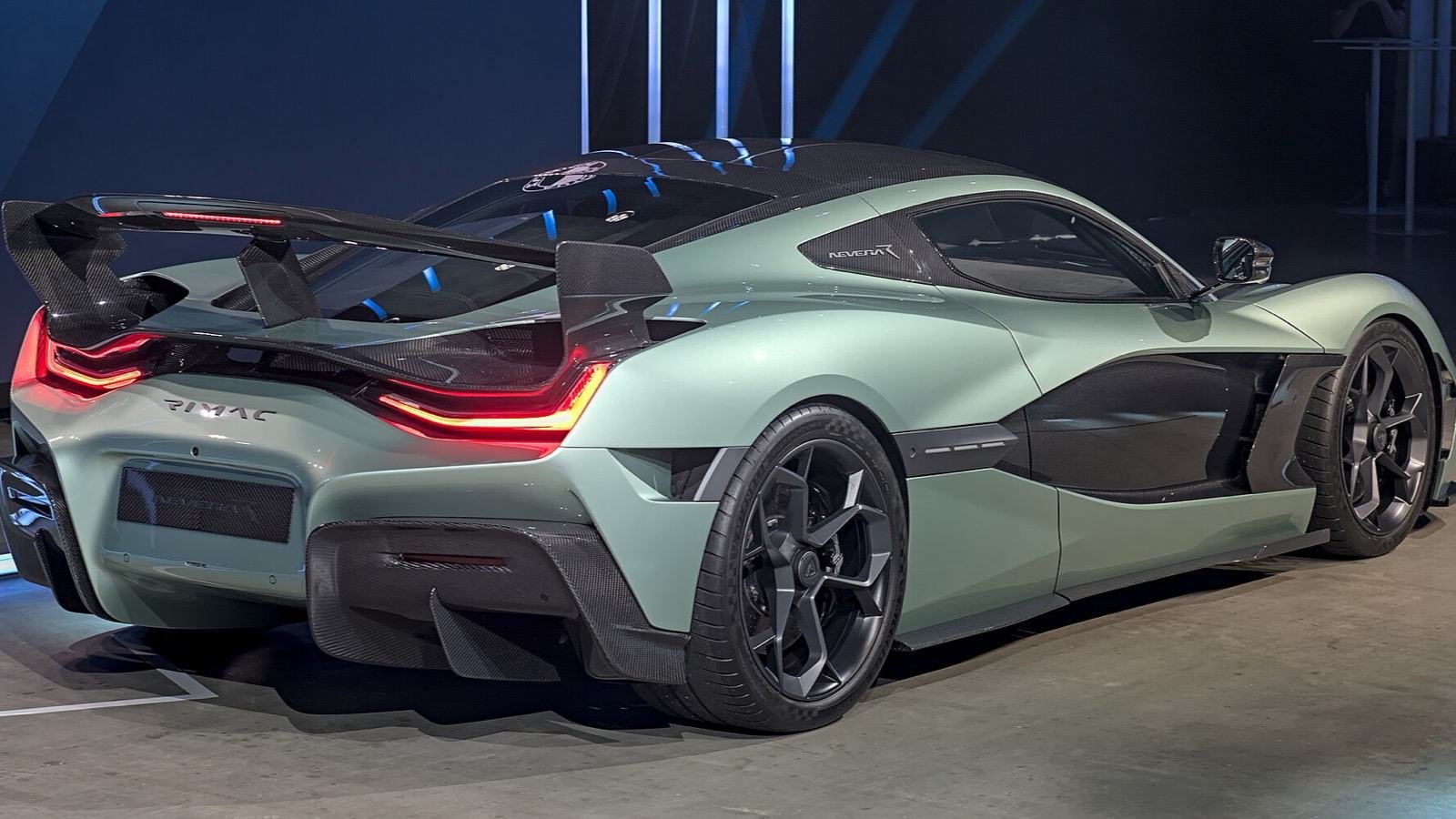
Rimac Nevera R: 1.66s 0-60 Explained
In July 2025, the Rimac Nevera R rewrote the record book, 24 performance records in a single day, including a 0-60 mph time of 1.66 seconds. It is, by the numbers, the quickest-accelerating production car ever made. But that 1.66-second figure comes with a detail most headlines skip: it was measured with a one-foot rollout. Understanding what that means is the difference between reading a spec sheet and actually understanding it, and it is exactly why your own GPS-timed 0-60 can read slower than the brochure without anything being wrong.
The Nevera R Just Reset the Record Book
The Nevera R is the hardcore evolution of Rimac's electric hypercar. Its run of records, independently verified by Dewesoft, includes a reclaimed 0-400-0 km/h title at 25.79 seconds (2.04 seconds quicker than the previous holder), a fastest-EV top speed of 268.2 mph (431.45 km/h), and a quarter mile of 7.90 seconds, the first production car to break 8 seconds in the quarter.
| Metric | Nevera R | Standard Nevera |
|---|---|---|
| 0-60 mph | 1.66 s (with 1-ft rollout) | 1.74 s (with rollout) |
| 0-100 km/h | 1.72 s | 1.81 s |
| 0-200 km/h | 3.95 s | 4.42 s |
| 0-400-0 km/h | 25.79 s | 29.93 s |
| Quarter mile | 7.90 s | , |
| Top speed | 268.2 mph | 256 mph |
| Power | 2,107 hp | ~1,914 hp |
| Production | 40 units | 150 units |
Note that the Nevera R is a separate, 40-unit run, not to be confused with the standard 150-unit Nevera.
2,107 HP, Four Motors, 40 Cars
The Nevera R produces 2,107 hp from four individual electric motors, one per wheel, with full torque vectoring. Pricing starts around €2.3 million, and just 40 will be built. Across every speed band, 0-60, 0-100 km/h, 0-200 km/h, 0-300 km/h, it improves on the already-ferocious standard Nevera. For more context on where it sits among the world's quickest machines, see our fastest car in the world rankings and EV 0-60 times ranked.
That 1.66-Second 0-60: Read the Fine Print
Here is the important part. Dewesoft, the firm that instrumented and verified the runs, started the 0-60 clock after one foot of rollout, once the car passed a velocity threshold of 0.5 mph. In other words, the timer did not start from a dead, motionless stop, it started after the car had already traveled the first twelve inches. The standard Nevera's 1.74-second figure uses the same convention.
This is not Rimac cheating. It is the long-standing US testing convention, and the 1.66-second number is real and third-party-verified. But it is a rollout-assisted number, and knowing that changes how you compare it to a time you measure yourself.
What "One-Foot Rollout" Actually Means
The one-foot rollout comes from drag racing. At a dragstrip, the timing system does not start when the car begins to move, it starts when the front wheel rolls out of the staging beams, about one foot ahead. US car magazines adopted the same method for consistency, so most published 0-60 times you have ever read include it.
Because the first foot of a launch is the slowest, lowest-speed part of the entire run, starting the clock after it removes the hardest tenths. The effect is typically about 0.2 to 0.3 seconds shaved off a 0-60 time.
| Concept | What it means | Effect on 0-60 |
|---|---|---|
| 1-foot rollout | Clock starts after the first 12 inches of travel | Shaves ~0.2-0.3 s off the time |
| True static 0-60 | Clock starts the instant the car moves | The slower, honest number |
Why It Matters When You Test Your Own Car
If you measure your own car from a true standstill and get a time 0.2-0.3 seconds slower than the manufacturer's figure, that is not a fault, you are simply measuring a different thing. The faster a car is off the line, the smaller the gap, because a high-torque EV covers that first foot almost instantly. Our guide to measuring your 0-60 time breaks down the convention in detail, and our Xiaomi SU7 Ultra vs Rimac Nevera comparison shows how rollout disclosure changes head-to-head numbers.
How FastTrack Measures Both
This is where honest measurement matters. FastTrack uses GPS combined with a high-rate accelerometer to record your full speed-over-time curve, and it lets you compare your runs with and without a rollout adjustment. That means you can line up your real number against a manufacturer's rollout-assisted figure on equal terms, apples to apples, instead of chasing a time that was never measured from a dead stop.
The Nevera R is genuinely the quickest-accelerating production car on Earth, and its records are verified. Knowing the rollout convention behind that 1.66-second headline is what separates an enthusiast from a spec-sheet reader.
FAQ
Is the Rimac Nevera R's 1.66-second 0-60 measured with a rollout?
Yes. Dewesoft, which verified the runs, measured the time after one foot of rollout, with timing starting once the car passed a 0.5 mph velocity threshold. A true standstill 0-60 would be slightly slower. The standard Nevera's 1.74-second time uses the same convention.
Why are 0-60 times measured with a rollout?
The convention comes from drag racing, where the timer only starts after a car rolls out of the staging beams, about one foot. US magazines adopted it for consistency. Because the first foot is the slowest part of a launch, starting the clock after it typically shaves 0.2 to 0.3 seconds off the time.
How much faster is a 0-60 with rollout vs. without?
Usually about 0.2 to 0.3 seconds. The faster a car is off the line, the smaller the gap, since a high-torque EV like the Nevera R covers that first foot almost instantly.
Why is my GPS-measured 0-60 slower than the manufacturer's number?
Most likely because the factory figure includes a one-foot rollout and your timer measured from a true standstill. It is not an error, they are two different measurements. FastTrack can show both so you can compare like for like.
How many Rimac Nevera R units will be built?
Production is capped at 40 units worldwide, starting at around €2.3 million each.