Updated August 2026
Affordable Fast EVs of 2026: 0-60 Ranked
Sub-3-second 0-60 used to mean a six-figure supercar. In 2026 it comes in a $56,000 sedan. Instant electric torque, all-wheel drive, and no gears to shift through have made genuinely quick EVs cheap enough to cross-shop with a loaded family car. This page ranks the most affordable fast EVs of 2026, roughly ≤$65,000, US market, by 0-60 mph, with power, price, and drivetrain, and it labels which times are manufacturer claims versus independent tests.
For the full picture including hypercars and six-figure flagships, see the broad fastest EVs 0-60 hub. This list is the value cut of that same data.
How to read these numbers
Every 0-60 time is the manufacturer's claim unless marked (tested), meaning a third party independently measured it. EV claims are launch-control best cases on a full battery and a prepped surface, so real runs vary with state of charge, temperature, tires, and whether the figure includes a 1-foot rollout. Prices are approximate US base MSRP as of August 2026; a couple of entries sit just over the ~$65K bar and earn a place on performance. Quarter-mile figures aren't published for most of these trims. The only way to know your car's real number is to measure it with GPS.
The most affordable fast EVs of 2026
| EV | 0-60 mph | ¼-mile | Horsepower | Price (approx.) | Drivetrain |
|---|---|---|---|---|---|
| Tesla Model 3 Performance | 2.9s | , | 510 hp | ~$56,620 | EV, AWD |
| Kia EV6 GT | 3.2s (tested) | , | 641 hp | ~$63,800 | EV, AWD |
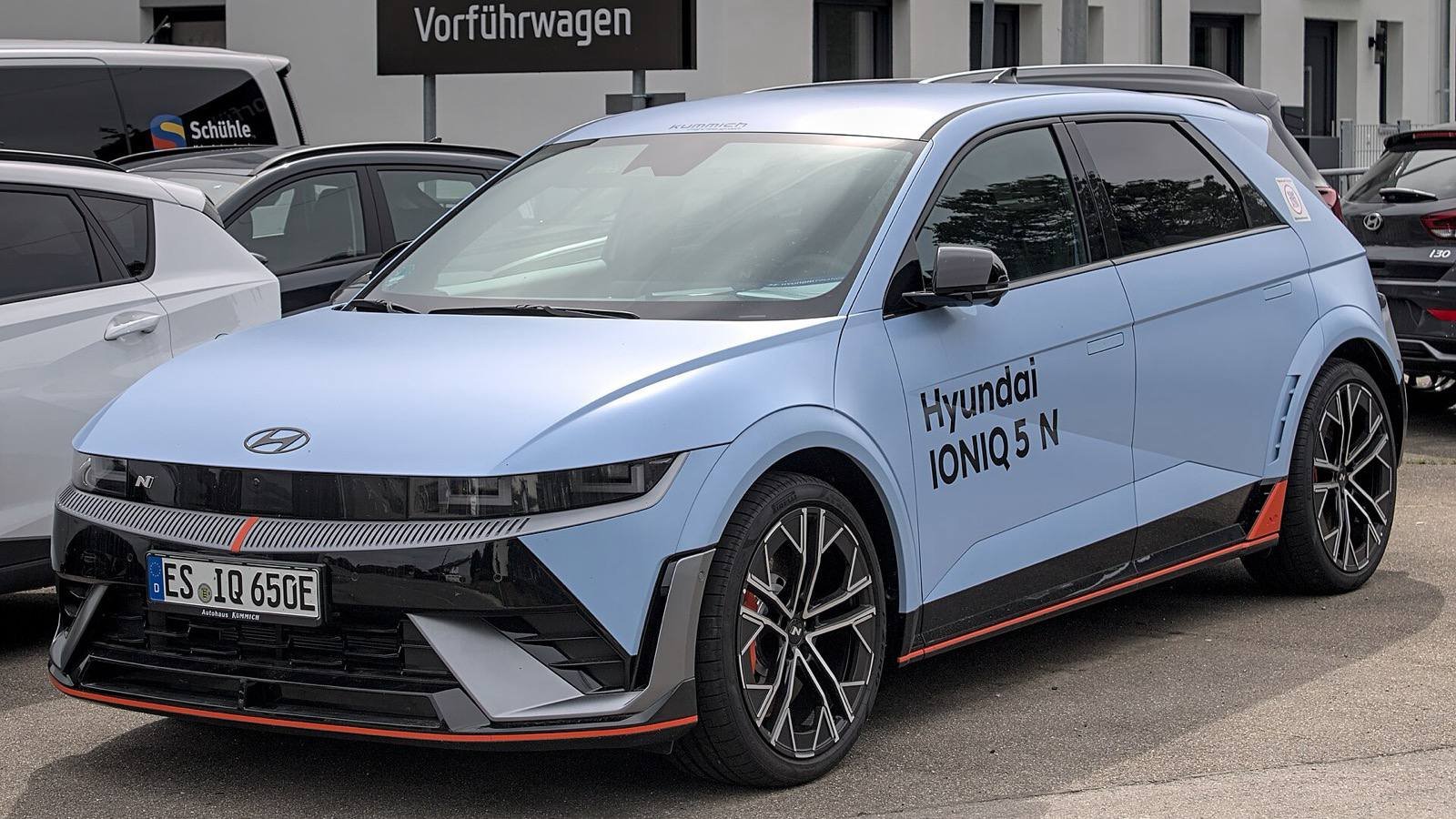
| Hyundai Ioniq 5 N | 3.25s | , | 641 hp | ~$66,000–68,000 | EV, AWD |
| Tesla Model Y Performance | 3.3s | , | 460 hp | ~$59,130 | EV, AWD |
| Chevrolet Blazer EV SS | 3.4s | , | 615 hp | ~$61,000 | EV, AWD |
| Ford Mustang Mach-E GT | 3.5s | , | 480 hp | ~$54,000 | EV, AWD |
| Polestar 2 Performance | 4.1s | , | 455 hp | ~$56,000 | EV, AWD |
| Volkswagen ID.4 AWD Pro S | 4.9s | , | 335 hp | ~$50,000 | EV, AWD |
*Price note: the Kia EV6 GT figure is the 2025 MSRP, the 641-hp 2026 GT isn't priced yet (Kia has announced only the GT-Line, from $48,700 RWD / $53,000 AWD).*
Want to see how the power maps to weight? Feed any of these into the power-to-weight ratio calculator.
Best value: quick and cheap
Three picks stand out depending on what you're optimizing for:
- Outright speed-per-dollar: Tesla Model 3 Performance. At roughly $56,620 with a claimed 2.9-second 0-60, it's the quickest car on the list and cleanly under the bar.
- Cheapest genuinely quick: Ford Mustang Mach-E GT. Around $54,000 for a claimed 3.5 seconds, the lowest sticker here that still feels fast.
- The one with a tested number: Kia EV6 GT. At an independently tested 3.2 seconds it's the quickest verified figure on the list, though at ~$63,800 (2025 MSRP) it sits at the top of the price range.
For value performance beyond EVs, see our fastest cars under $50K and fastest cars of 2026.
Claimed vs. tested: why the sticker isn't the whole story
Only one figure on this list, the Kia EV6 GT's 3.2 seconds, is an independent test result; the rest are manufacturer claims. That matters, because EV claims are best-case launch-control runs at full charge on prepped pavement, and real acceleration moves with state of charge, battery temperature, tire grip, and rollout convention. Some cars beat their claim on a good day; others fall short. The honest answer is the same every time: don't trust the sticker, measure it. See how owners' real numbers stack up on the broad EV 0-60 rankings.
Verify your EV's real 0-60
Whichever you buy, the manufacturer number is a starting point, not a guarantee. FastTrack's free GPS timer measures your car's actual 0-60 and quarter mile in real conditions, no dedicated hardware, and the leaderboards show how your EV ranks against other owners of the same model.
FAQ
What's the cheapest fast EV in 2026?
Among genuinely quick 2026 EVs, the Ford Mustang Mach-E GT has the lowest sticker at roughly $54,000 for a claimed 3.5-second 0-60. If you want the quickest sub-$60K car outright, the Tesla Model 3 Performance (~$56,620, a claimed 2.9 seconds) is hard to beat.
What's the fastest affordable EV of 2026?
The Tesla Model 3 Performance leads this value list with a manufacturer-claimed 2.9 seconds, followed by the independently tested Kia EV6 GT at 3.2 seconds. For the fastest EVs at any price, see the fastest EVs 0-60 hub.
Do these EVs actually hit their advertised 0-60 times?
Sometimes, but not always. Manufacturer figures are launch-control best cases at full charge on ideal surfaces, and only the Kia EV6 GT's 3.2-second time here is an independent test result, the rest are claims. Real acceleration shifts with state of charge, temperature, grip, and rollout, which is why measuring your own car with GPS is the only way to know its true time.
How is this different from the fastest EVs hub?
This page is the value cut, roughly ≤$65,000, US market, of the broader fastest EVs 0-60 hub, which ranks everything from million-dollar hypercars down to attainable models. Same data and honesty standard, narrower budget.
What's the best value fast EV in 2026?
The Tesla Model 3 Performance (~$56,620, a claimed 2.9 seconds) for outright speed-per-dollar, or the Ford Mustang Mach-E GT (~$54,000) for the lowest price on a genuinely quick EV.