Updated August 2026
Fastest Cars Under $50K (2026)
The fastest new car under $50,000 in 2026 is the Ford Mustang GT, $46,885, 480 horsepower, and 0-60 in a claimed 4.2 seconds. Behind it sit the Volkswagen Golf R (4.4s claimed, 4.1s in Car and Driver's testing) and the Nissan Z (4.5s), with the Hyundai Elantra N delivering the best tested-time-per-dollar of anything on this list. Finding a fast car does not require six figures, but the sub-$50K market moved a lot this year, and several cars that used to anchor lists like this one are gone.
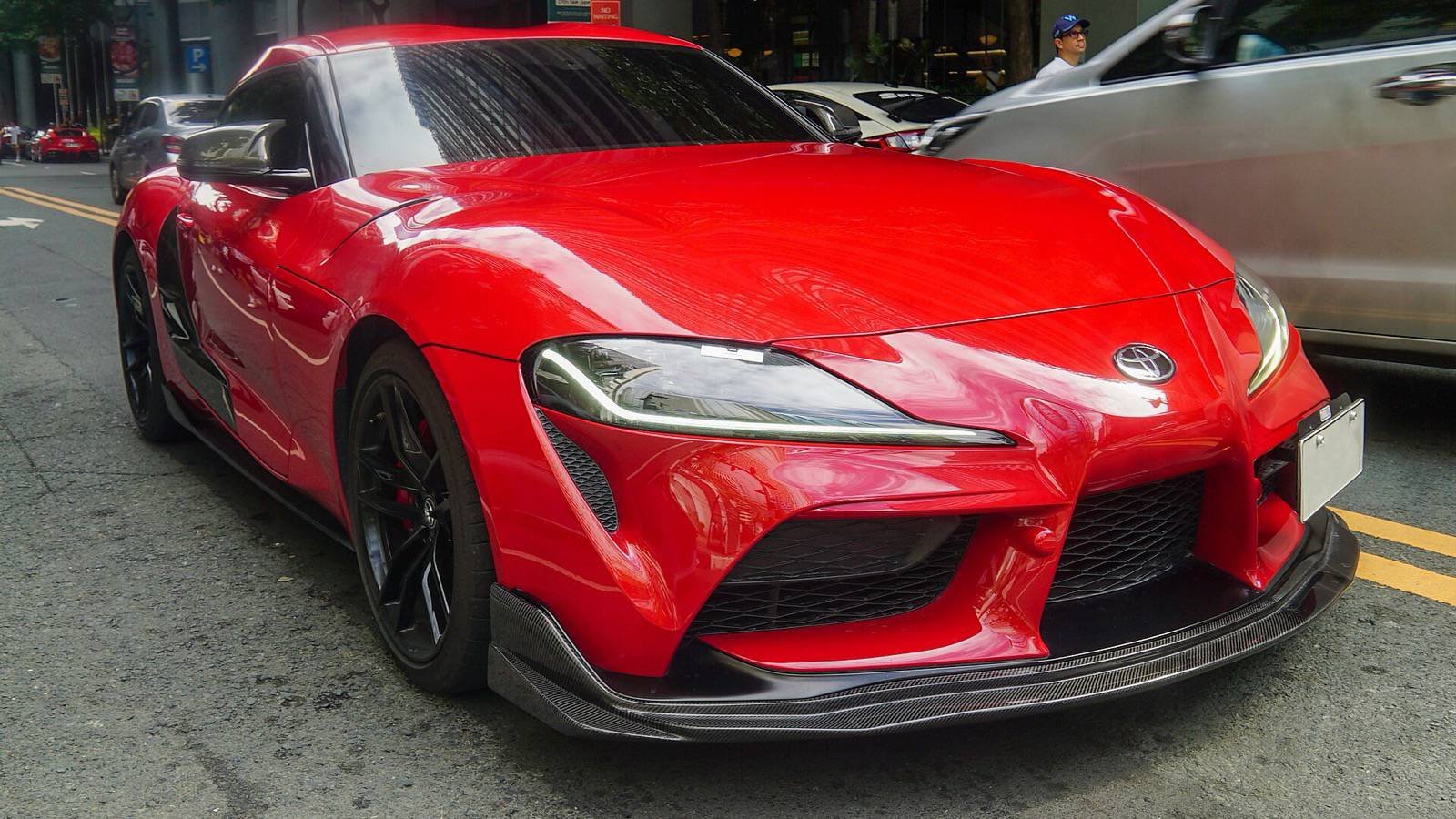
This update matters because the old answers are dead: the Toyota GR Supra ends production in spring 2026 at a $58,035 base price, the Mustang Dark Horse now starts at $63,080, the Kia Stinger and gas Dodge Charger are discontinued, and the Tesla Model 3 Performance has crept to $54,990. Here's what's actually fast and actually under $50K in August 2026, and how to verify the claims with your own GPS-measured runs.
The performance-per-dollar philosophy
Every dollar of budget should deliver measurable performance. In the sub-$50K space, that means prioritizing real 0-60 acceleration over flashy styling, engine character and engagement over displacement, driver-focused chassis tuning over tech gadgetry, and value retention with modification potential for future upgrades.
A 2026 Corvette Stingray now starts at $71,995, a full $22K over budget. The Mustang GT delivers most of that straight-line experience for $46,885. A Subaru WRX at $32,495 gets you a tested 5.5-second 0-60 for less than half a Corvette. If your budget stretches further, our guide to the fastest cars under $75K and fastest cars under $100K open up the next tiers.
The question is not "what is the fastest car I can afford?" but "which car gives me the most performance value, considering my driving style and budget flexibility?"
The fastest new cars under $50K, ranked by 0-60
Times are the manufacturer's claim unless marked (tested), which means an independent outlet measured it, where both exist and disagree, we show both. Real-world GPS-verified times typically run 0.3 to 0.5 seconds slower than claims because claims use a 1-foot rollout and prepped surfaces.
| Car | 0-60 mph | Horsepower | Starting Price | Transmission |
|---|---|---|---|---|
| Ford Mustang GT | 4.2s | 480 hp | $46,885 | 6-speed manual / 10-speed auto |
| Volkswagen Golf R | 4.4s (4.1s tested) | 328 hp | $49,455 | 7-speed dual-clutch |
| Ford Mustang EcoBoost | 4.5s (~5.0s tested) | 315 hp | $32,320 | 10-speed auto |
| Nissan Z | 4.5s | 400 hp | $42,970 | 6-speed manual / 9-speed auto |
| Hyundai Elantra N | 4.8s (tested, DCT) | 276 hp | ~$35,300 | 6-speed manual / 8-speed DCT |
| Honda Civic Type R | 4.9s (tested) | 315 hp | ~$47,395 | 6-speed manual |
| Subaru WRX | 5.5s (tested) | 271 hp | $32,495 | 6-speed manual / CVT |
| Toyota GR Corolla | 5.3-5.8s (tested range) | 300 hp | $40,520 | 6-speed manual / 8-speed auto |
| Toyota GR86 | 5.8s | 228 hp | $30,800 | 6-speed manual / automatic |
| Mazda MX-5 Miata | 6.3s | 181 hp | $30,430 | 6-speed manual / automatic |
Notes on the bubble. The Golf R's $49,455 MSRP squeaks under $50K before its $1,275 destination fee, with delivery it lands just over, so haggle accordingly. The new gas Dodge Charger Sixpack R/T (420-hp twin-turbo inline-six, $49,995) also arrives right at the line for 2026, but no independent 0-60 test of the R/T trim has been published yet, so it sits out of the ranking until real numbers exist. The 550-hp Scat Pack version is $54,995, over budget.
What left the list since spring. The GR Supra's four-cylinder trim is long gone and the six-cylinder Final Edition ($69,085) closes out production in spring 2026. The Mustang Dark Horse is a $63,080 car now. The Kia Stinger died after 2023, the Infiniti Q50 after 2024, and the Lexus IS500 was dropped for 2026, the last three live on below as used bargains.
Best used performance bargains under $50K
Buying used opens up a second tier: cars that cost $70K-$90K new, now available sub-$50K. Used-market prices below are indicative ranges, verify current listings, since the used market has moved since spring 2026.
C7 Chevrolet Corvette Stingray (2014-2019)
The C7 generation Corvette is a bargain-bin supercar. A clean 2016-2017 Stingray with 50,000 miles has been running $38,000-$45,000. The 6.2L V8 produces 455 horsepower and hits 3.8 seconds 0-60 (manufacturer figure, slightly optimistic in real testing). You get a true front-engine, rear-drive sports car with independent suspension, available carbon-ceramic brakes, and raw driving engagement. Maintenance is straightforward; parts are affordable; modification potential is high.
The main trade-off: fuel economy (16-19 mpg combined) and interior practicality. The C7 is a weekend car first, a daily driver second. But for pure acceleration and driver feedback per dollar, it is unbeaten in this market.
BMW M240i xDrive (2022-2023, used)
BMW's compact performance coupe delivers 382 horsepower from a turbocharged 3.0L inline-six, good for a tested 0-60 around 3.9-4.1 seconds with xDrive traction, genuinely quicker than anything on the new-car list above. A used 2022-2023 with 15,000-30,000 miles has been costing $38,000-$45,000; note the new 2026 M240i starts around $55,600, which is why it now lives in the used section. Sharp handling, premium interior, and all-weather usability. Worst for: people worried about BMW dealer service costs.
Infiniti Q50 Red Sport 400 (2021-2022, used)
The Q50 Red Sport 400, discontinued after 2024, is a four-door luxury sedan with a twin-turbo V6 and 400 horsepower. Real-world 0-60 times land around 4.5 seconds. A used 2021-2022 with 20,000-40,000 miles has been costing $35,000-$42,000. The value proposition is refinement: leather, big display, and luxury equipment as standard. The downside is limited modification potential and less engaging transmission programming than a Mustang or Corvette.
Lexus IS500 (2022-2023, used)
The IS500 is powered by a naturally aspirated 5.0L V8 with 472 horsepower, 0-60 in about 4.6 seconds (real-world testing confirms it). Lexus dropped it from the 2026 lineup, which makes the used examples, roughly $42,000-$48,000 for a 2022-2023 with 10,000-30,000 miles, the only way in. The appeal: Lexus reliability, a characterful V8 with no turbo lag, and rear-drive balance. It trades some sportiness for dependability.
Chevrolet Camaro SS (2021-2023, used)
The Camaro SS packs a 6.2L naturally aspirated V8 with 455 horsepower and hits 0-60 in the low-4-second range. Chevrolet ended Camaro production after 2024, which strengthens the used case: a 2021-2023 SS with 20,000-50,000 miles has been costing $35,000-$43,000 and isn't getting replaced. It is less refined than the Infiniti or Lexus but more focused than either, with massive aftermarket support.
New vs. used: which should you buy?
New performance cars under $50K offer warranty coverage, the latest tech, and first-owner peace of mind. The Mustang GT and Subaru WRX deliver real performance at genuinely attainable prices.
Used performance cars in the $40K-$48K range often deliver 10-15% more acceleration per dollar because depreciation works in your favor. A used C7 Corvette or M240i is objectively quicker than a new Mustang GT at the same money. But used cars need pre-purchase inspections and carry maintenance risk without factory warranty (unless certified pre-owned).
The practical answer: if you plan to keep the car 3+ years and prioritize reliability, go new. If you'll spend an hour on a pre-purchase inspection and can absorb surprises, used delivers exceptional value.
Manual vs. automatic: what is faster?
In 2026, this is no longer a landslide debate.
Manuals (Mustang GT, Civic Type R, WRX, Nissan Z, GR86, Miata) eliminate the abstraction between you and the engine, but a missed shift costs more time than any automatic ever gives up. Modern automatics and DCTs (Mustang's 10-speed, Golf R's 7-speed DSG, Elantra N's 8-speed DCT) launch harder and shift faster than nearly any human, the Elantra N's tested 4.8s specifically requires the DCT and launch control. On the road, the difference is consistency: the automatic runs the same number every time; the manual runs your number.
Recommendation: choose the manual if the mechanical engagement is the point. Choose the automatic/DCT if the stopwatch is the point. Then measure both honestly, our guide to improving your 0-60 time covers launch technique for each.
EV performance under $50K in 2026
This tier effectively emptied out this year. The Tesla Model 3 Performance, long the default "fastest thing under $50K" answer, now starts at $54,990, and the Hyundai Ioniq 5 N is $59,900 even after its 2026 price cut. Nothing currently sold new under $50K in the US matches the Mustang GT's straight-line pace on electricity.
If you can stretch past the line, the Model 3 Performance's low-3-second capability embarrasses everything in this price class for a single run, with the usual EV caveats: thermal throttling degrades repeated launches by 0.5-1.0 second, and claimed times assume conditions you won't replicate. Our affordable fast EVs breakdown tracks this segment as prices move.
Testing real performance with FastTrack
Manufacturer 0-60 times are optimistic: professional drivers, perfect conditions, 1-foot rollout. When you drive your car, you are slower, and knowing your real number is the entire point of a list like this.
FastTrack's GPS-based timing measures your actual 0-60 and quarter mile and compares it against other owners of the same car. Over thousands of runs, patterns emerge: which cars beat their specs, which underdeliver, and which conditions matter most. Browse the performance leaderboards, the 4-to-5 second bracket and 5-to-6 second bracket are where these cars actually live when everyday enthusiasts drive them. Before you buy, estimate what a given power-to-weight combination should run with the power-to-weight calculator.
Modification and tuning potential
High modification potential: Ford Mustang GT (tune, intake, exhaust add 30-50 hp; Coyote V8 aftermarket is enormous), used C7 Corvette (LS/LT ecosystem), Subaru WRX (massive turbo tuning community).
Moderate: Civic Type R (limited by front-drive traction more than power), Nissan Z (proven VR30 twin-turbo, growing aftermarket), Golf R (tunes exist; transmission holds back some gains), GR Corolla (young but active scene).
Low: GR86 (limited power ceiling), Elantra N (newer platform, smaller community), Miata (you buy it for balance, not boost).
If you plan to upgrade over time, prioritize the Mustang or a used Corvette. If you want a finished product out of the box, the Type R and Golf R are the picks. When you do modify, run before/after passes, our guide to stage 1 and stage 2 mods explains what each level actually buys you.
Conclusion
The fastest cars under $50K in 2026 deliver genuine performance without six-figure price tags, but the roster changed. The Mustang GT at $46,885 is the new anchor, the Golf R and Elantra N are the tested-time value plays, and the used market (C7 Corvette, M240i, Camaro SS) still beats everything new at the same price. Use FastTrack to verify your car's claimed performance and see how you stack up against owners of the same model, real data beats marketing specs. For the bigger picture across every price point, see our ranking of the fastest cars of 2026.
FAQ
What is the fastest new car under $50K in 2026?
The Ford Mustang GT, $46,885, 480 hp, and a claimed 4.2-second 0-60. The Volkswagen Golf R is the quickest independently tested car on the list (4.1 seconds, Car and Driver), though destination fees push its real transaction price just past $50K.
What is the cheapest car that can hit under 5 seconds 0-60?
The Ford Mustang EcoBoost ($32,320, 315 hp) claims 4.5 seconds, though independent tests run closer to 5.0. The most affordable verified sub-5-second car is the Hyundai Elantra N (~$35,300), which Car and Driver tested at 4.8 seconds with the DCT and launch control.
Can I actually hit the manufacturer 0-60 times when I test my car on FastTrack?
Unlikely on the first try. Manufacturer times use 1-foot rollout, which starts the timer after the car has already moved one foot. GPS-based timing starts from complete rest. Expect real-world times 0.3 to 0.5 seconds slower. If your car is stock, properly maintained, and you launch well, you can get close.
Is a used Corvette C7 worth buying at $40K?
Absolutely, if you are buying for performance and handling rather than daily practicality. Its 455-hp V8 outruns everything on the new sub-$50K list. The downsides are fuel economy of 16 to 19 mpg, limited storage, and the attention it attracts. As a weekend car, it is unbeatable for the price.
Should I buy a new Mustang GT or a used Corvette?
The Mustang GT is newer, comes with a warranty, and its 480-hp Coyote V8 is a tuning platform with enormous headroom. The used C7 Corvette is quicker out of the box and more special, but carries used-car risk. If you drive daily and want reliability, go new Mustang. If you value outright pace and rarity, go used Corvette.
Is a Tesla Model 3 Performance faster than a gas car at the same price?
It's no longer at the same price, the Model 3 Performance starts at $54,990 in 2026, about $8K over this list's budget. If you stretch to it, nothing here matches its single-run acceleration; but after two or three aggressive launches, thermal throttling costs it 0.5-1.0 second while a gas V8 keeps repeating its number.
What should I look for in a used performance car inspection?
Check service history, fluid levels, signs of abuse like overheating or carbon buildup, suspension wear, brake rotor thickness, and tire condition. On a test drive, listen for turbo whine, transmission hesitation, and clutch feel on manuals. A $150 to $300 pre-purchase inspection from a performance specialist is the cheapest insurance against buying a lemon.